Reflection · Teaching

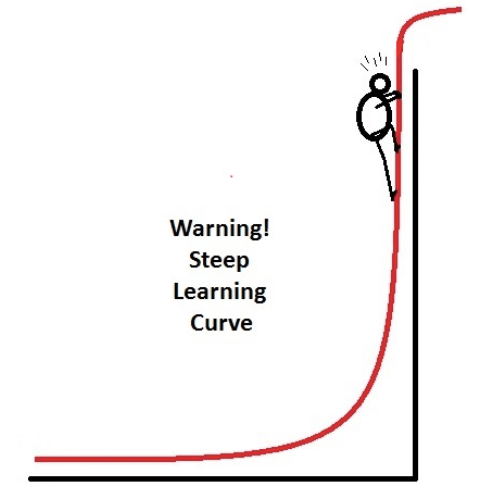
Rookie Diaries #1 – The Steep Learning Curve

A week ago, I had a dream in which I was digging for gold. I sank the shovel into the soil and dug until the metal hit the wooden box. Finally, after throwing away the last pile of dirt to the side, I looked back at the spot beneath me, only to find it filled once again. With a brief sigh, I squared my shoulders and started shoveling all over again. And again… and again.

There’s so much to learn!

I’ve officially finished my first official month as a teacher for the Department of Education of New York. In the last four weeks, I many mistakes and failed many…many times. It has been a roller-coaster of emotions all around, from adjusting to a new work-culture to managing and building working relationships, writing lesson plans, and preparing for anxiety enduring observations. And I must say, I underestimated the among of work I would end up taking home.

I came into this career, hoping to be an advocate, and I’ve already encountered opportunities to advocate for my students. On the same token, I have already met rock blocks, and it seems like the only way to learn is the process of failing miserably.

Thus my dream, I think it was a metaphor for how I’ve been feeling lately. As a first-year teacher, I had days when I felt like I was trying to take on too much all at once, but the desire to do my best for my students makes me feel guilty when I can’t perform or achieve what’s needed to help them succeed.

Reflection

A Story About Me: “Normal” Vs. “Abnormal”

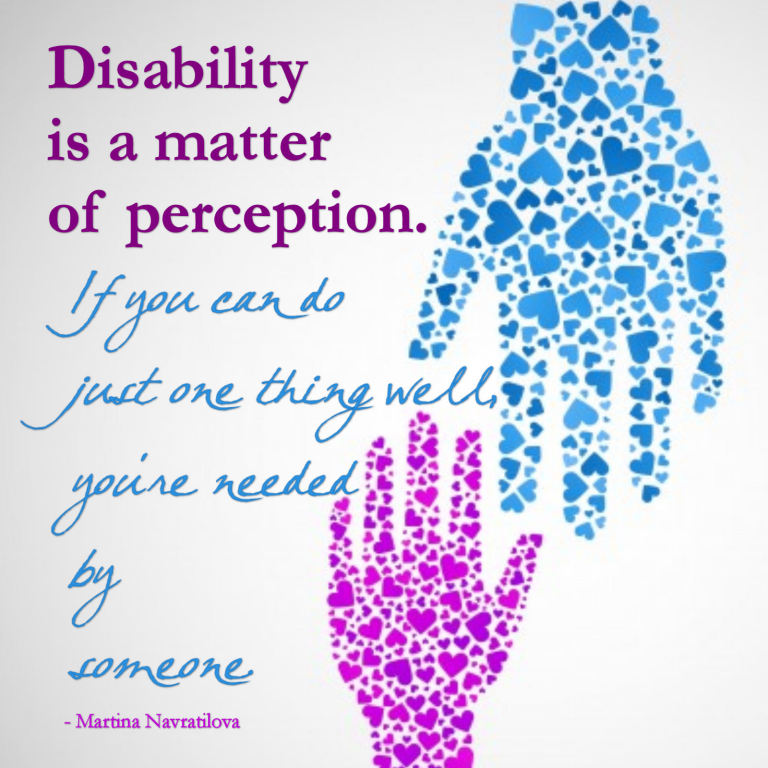
Our society is obsessed with categorizing things. It seems like everything has to go in neat little boxes for us to examine and understand. Within that realm, there’s a category for “normalcy,” and for things considered “abnormal.” The latter carries a negative connotation, one that made it difficult for me even to use that word.

It’s no secret that “abnormal” is a word commonly used by our society to refer to people with disabilities. I hear the kids yell the word at each other in the hallways, and I listen to adults using the word to insult others.

The word “abnormal” is almost synonymous with “other.” It’s a way to isolate people who don’t fit the social standards of ability or beauty.

As a teen, I remember being diagnosed with Polycystic Ovarian Syndrome. It mean that for me (not all women have the same symptoms), I had facial hair on my face. It also meant that I was a target for crude and rude comments from other students and even adults.

A teenager asked me, “go shave.”
An adult felt the need to point it out with huge surprise, “you have hair on your face!”

As a result, the hair on my face became a reason for low self-esteem and social isolation. Emotionally, as a teenager and an immigrant, I felt embarrassed by my socially assigned “abnormality.”

The hair on my face was not a disability, but it certainly shaped how I feel about the word itself.

After all, is there such thing as normal?

I think not.

Representation · Thinking About Intersectionality

The Intersectionality Between Social and Medical Models of Disability

I love Molly Burke. She’s a young, smart, and beautiful Youtuber who also happens to be blind. Ms. Burke’s candid conversations about blindness with curious non-blind Youtubers are always insightful. Molly is not the girl stereotyped blind person who see depicted on television. She comes up as a self-assured, intelligent, and ambitious young lady.

Therefore, Molly’s video “Meet My Eye Doctor” came into my mind when I was asked by my professor to write about the differences between social and medical models of disabilities. I think Molly’s candidness and her self-reflection can teach us a lot about how social and medical models can sometimes merge, good or bad.

According to Susan Baglieri’s “Perspectives on Disability,” the medical model of disability “makes meaning of disabled person’s experiences in terms of objective, innate conditions that limit their ability to participate in communities and learn in the general classroom” (Baglieri, 2017, pg. 18). The author justly argues that the medical model emphasizes the root of the disability and provides a “limited understanding of the individual itself” (Baglieri, 2017, pg. 20). This line of thinking is “based on the premise that being healthy is better than being sick” (Hardman, Drew, & Egan, 1996, pg.18). In the end, a person’s disability is categorized as “abnormal” and victimized. The victimization of people with disabilities is referred to as the “charity model of disability.” The charity model portrays people with disabilities as “victims of their circumstances who are deserving of pity” (Disabled World). The charity model is also known as the “tragedy model of disability,” and the medical model perspective supports it. It sees individuals with disabilities as clients.

In contrast, the history of children with disabilities in the United States shows that our society has held to the belief that “disability and dependency were closely related” (Shapiro, 2000, pg.188). Educators play a significant role in the experiences of students in educational institutions. Educators are tasked with educating students, meeting the demands of the state, and they are held liable for the performance of their students. Hence, educators are placed on the front lines and run the risk of becoming gatekeepers to just and fair education. According to the professional model of disability, “professionals follow a process of identifying the impairment and its limitations using the medical model and taking the necessary action to improve the position of the disabled person” (Disabled World). As a result, service providers and teachers are placed in a position of power in the classroom. Based on my experience in the classroom, I believe it is the job of educators to stay educated, to listen to their students, and to take responsibility for the role they play in the experiences of children in their schools. Educators should not only acknowledge dangers of sticking solely on the medical model of disability, but they should also recognize the cultural ideals of “normalcy” affecting the lives of students with disabilities inside and outside the classroom.

Baglieri, S. (2017). Perspectives on disability. In S. Baglieri, Disability studies and the inclusive classroom: Critical practices for embracing diversity in education (pp. 17-32). New York, NY: Routledge.

Shapiro, A. (2000). Early Attitudes and Their Legacies. Change Negative Attitudes Toward Classmates with Disabilities (pp. 145-265). Martha J. Larkin. Published May 1, 2002

Uncategorized

Rookie Diaries 3 : Adults in High School – Co-Teaching for a First-Year Teacher

During the last three months, I have been navigating my first year teaching and my first co-teaching experience carefully. Most times, I have no idea what I’m doing or what I should be doing to be the best teacher I can possibly be to the students. In the process, I am also learning the importance of building community, and I’m realizing that community means a lot to me.

So, what happens when one’s co-teachers are not necessarily interested in having a co-teacher? I have worked closely with many people in the past, where I was able to learn and feel heard when situations started. I understand not everyone likes to work in groups. Moreover, co-teaching is like “cooking in someone else’s kitchen.” I have tried to watch and absorb, all while being asked to give 50% of the efforts. The latter rarely works though, as we don’t have enough to co-plan together, and the students are approaching their last regents’ examination. It often feels like we are raising against the clock to finish lesson plans, print documents, grade work, and tutor students. It’s my opinion that those who are not comfortable or feel pride and ownership of their work could end up feeling resentful about the whole situation. And while I try my best to be useful, most of the time (without a clear direction or co-planning opportunities), I feel completely useless.

The relationships we have with other people can reveal our own personalities. Our dislikes and likes, the way we communicate, and even the way we set boundaries can be indications of our own personal history. Before becoming a teacher, I worked in social services, being paid to work with people (quite literally). In that job, I was asked by my superiors to leave behind all prejudice and personal judgments. I am attempting to do the same time in this new job, but I am finding the culture a bit difficult to navigate. I’m mostly trying to avoid gossip, trying to learn all the things, and trying not to get in anybody’s way. That said, I know I struggle to be appropriately assertive.

The continuous task of reevaluating my own prejudices forced me to develop a certain level of self-understanding and understanding about others. Unfortunately, however, I was not often able to establish a healthy level of comfort being assertive.

My first year as a teacher has presented me with many opportunities to be assertive, but the lack of time or the fast-paced environment makes it difficult for me to practice assertiveness without damaging the small gains I’ve accomplished to establish with my co-teachers.

Age and experience have also played a role in our relationship. As a first-year teacher, I am trying to be careful in straddling a line between being an apprentice and an advocate for my students. I have worked hard to develop a strong sense of self, but under the critical eye of more experienced teachers, I find myself doubting my skills and my ability to manage student behavior in the classroom. For example, one of my co-teachers can have a more aggressive and punitive approach to classroom management in the school. At times, I find his plan to be a little too punitive for the student, but I find myself doubting whether I could do any better. My second co-teacher is a seasoned instructor with a lot of knowledge and insight into pedagogy. Yet, she could be a little inflexible in the classroom and to slow trust those around her.


In the last three months, I have been trying to figure my position within this equation, balancing my role in the classroom. Most of my time and effort has gone to building working relationships with my coworkers, but at times, I find that it causes significant anxiety.

Reflection · Teaching

Rookie Diaries #2 – A Grain Of Self-Care

Lately, I feel like I’m losing a handle on my mental health. It has been a challenge to be a college student, a teacher, and caring for the people who depend on me. My self-care took the backseat, and I was starting to feel intense amounts of anxiety. I shared these feelings with a close friend, who’s also a former Fellow and a teacher, hoping that she would give me some sound advice to help me manage the stress.
“The cigar is strong, but we got to smoke it,” she said, in true Latina fashion.
I curled my lips.

The task of navigating office politics, being present at work, and meeting university deadlines was starting to take a toll. To function at my highest levels, I placed my self-care, friends, and family last on my list of priorities. As a result, I started to become angry with no apparent reason.
The truth is that I have always struggled with anxiety and depression. After years of therapy,

I was starting to feel more in control over my anxiety, and in extension, my physical health. I had developed strategies such as exercise, calling a friend, going for a walk, eating healthy meals, and watching a great film. These things help me manage my anxiety more than anything else. I had tried meditation in the past, but my mind cannot stay still (I blame technology). It just doesn’t work on me. I need to move, to talk, and to feel connected to the people who I respect and love. That said, it has become a challenge and a demonstration of revelation to carve out time for me. The last two months, however, have proven to be a test to my self-care.

I’m the type of person who always likes to give their best, and I am on a constant journey to learning. Two days ago, while mindlessly swallowing a bag of Oreos, I realized that I was experiencing emotional transference. The latter is used to describe the way we can take on the emotional trauma of others. In other words, we draw-in and experience some of the burnout or phycological injury of others without knowing.

A few of the teachers around me were experiencing burnout. Some of them were aware of the mental exhaustion, and they didn’t quite know what to do to solve it. The quiet frustration and anger of finding themselves constantly tired, the struggle with time management, and lack of balance were starting to turn into resentment.

I trust that those teachers will be able to manage this season of their lives, but I also have to work on protecting myself. Self-awareness has proven essential for identifying my emotions and sources of stress.

Teachers work HARD. I don’t regret the decision to become a teacher. Nevertheless, if we don’t work towards actively advocating for ourselves and taking time for ourselves, we will ooze our frustrations onto others. Perhaps, we might bleed onto the most vulnerable of all, our kids.

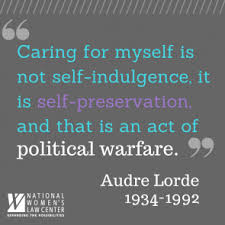
So far, if you were to ask me for help. I would encourage the practice of self-awareness. It would help you identify and manage the things that trigger your anxiety or burnout. Most importantly, I would also beg you to have self-compassion. We never learn to be self-compassionate, and the practice takes work, but it’s utterly necessary to survive.
Inclusion

My School Experiences and My Future Classroom Inclusion

During a class, we went around the room talking about our experiences with people with disabilities in public education. All of us, figure Special Education Teacher, recall the lack of representation of people with disabilities within our classrooms growing up. Special Education was that place was “Special Education” students, somewhere out of view from the rest of the school.

In retrospect, I realize that the isolation of students with disabilities in schools was a disservice for both general education and special education students. After all, how are we supposed to break the social standards of normalcy and stereotypes about people with disabilities?

As I continue in my journey to become an educator, I’m thinking about ways in which I can provide equity to students. I’m also thinking about ways to break stereotypes about people with disabilities and to make sure that we are creating a more inclusive world.

Not to mention, teachers hold a lot of power, and it is our responsibility to advocate for our students and to learn from them.

Representation

Disability in the Media

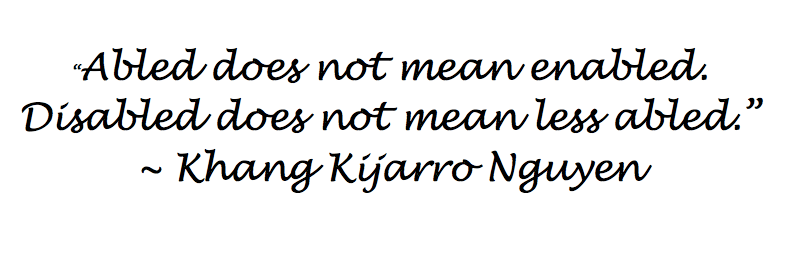
In the last five years, I have been considering my privilege. Yes, we all have it. I am a person of color, but I am also abled-bodied. My experiences as an able-bodied person have taught me that I do not have to worry about accessibility. I do not have to worry about is to go to the movies or restaurant. It also means that I am susceptible to the rhetoric in the media about disabilities.

It is not surprising to see the lack of representation of people with disabilities in the media. If there is representation, it usually falls into one of the following tropes:

  1. Victim/Helplessness
  2. Villain
  3. Burden
  4. Non-sexual
  5. At times…the Hero

I recently stumbled upon the video linked above, and I released that I have never heard from people with disabilities about what it means to see people with disabilities in the media. Collectedly, I think we should call for and support movies that represent people with disabilities accurately.

intersectionality · Teaching

Personal Reflection

Educators have the responsibility of being their students’ best advocates. We should advocate for more books depicting diverse characters, reflective of the students’ background and interests. Students should also have access to books and materials that help them access the curriculum. If possible, teachers should also help students become more conscious and aware of the oppressive systems that impact their lives. Students have the right to know about the things that impact their education, and they also have the power to effect change. Lisa D. Delpit’s reading forced me to self-reflect about how I have and might experience a culture of power at work. I am aware that my biases and prejudices are blind spots. As an individual, I should also strive to become more self-aware. I believe becoming self-aware is something that will require constant self-examination and insight into how my experiences might affect my response during difficult discussions about race, gender, and disability. For example, my experiences discussing topics about the history of colonization and imperialism with white individuals are not always been positive. Thankfully, I have learned to be more patient, learned to agree to disagree, but I still remove myself from difficult discussions to avoid getting angry or offended.